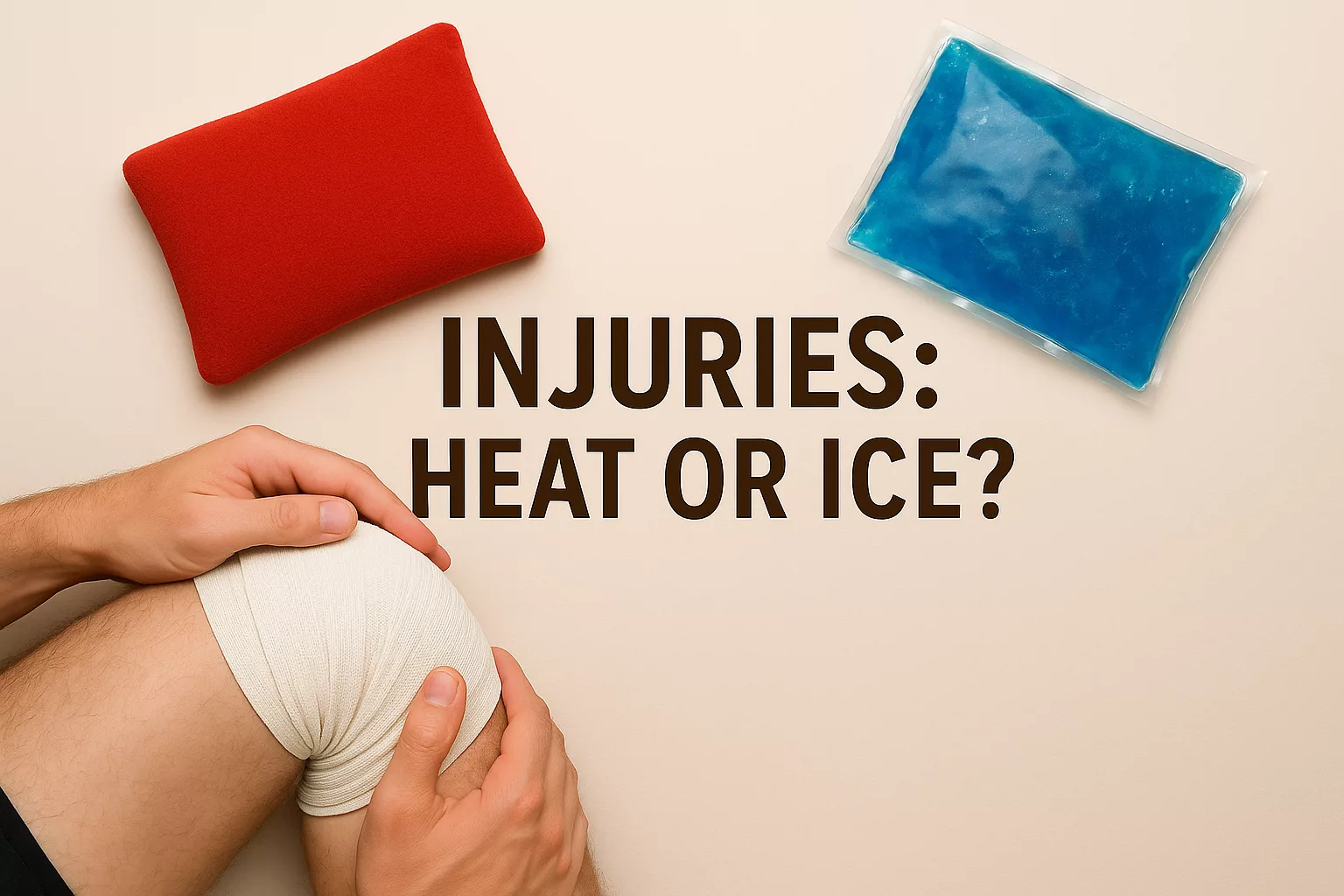
Heat or Ice? What to Use (and when) for Injury Recovery

Whether it’s rolling an ankle, pulling a muscle, or waking up with a sore back, when you get hurt you might ask yourself: Should I use heat or ice?
You’re not alone. This is one of the most common questions we get in clinic. And while the answer isn’t always simple, learning how pain, inflammation, and healing work can help you make better choices when managing your injury.
Let’s break it down.
What is Inflammation, and Why Does It Happen?
Inflammation often sounds like a bad thing, but it is actually one of the most important steps in your body’s healing process. It helps by:
- Bringing immune cells to the site of the injury
- Cleaning up damaged tissue
- Starting the repair process
Without inflammation, we would not recover from injuries. Pain and swelling, while uncomfortable, are signs that your body is working to heal.
However, too much inflammation or swelling that lasts too long can become a problem. It may slow your recovery, cause more stiffness, and make everyday movements more painful. This is where tools like ice and heat can help.
Ice (Cryotherapy)
When to use it:
- Right after the injury happens (usually within the first 48 to 72 hours)
- When the area is swollen, red, or very painful
- After hard workouts to reduce soreness or cool the body down
Ice works by causing vasoconstriction, which means the blood vessels in the area get smaller. This helps by:
- Decreasing pain by slowing nerve signals
- Reducing swelling
- Calming muscle spasms
- Slowing tissue breakdown
Ice can also improve performance in some cases. One study showed that cooling the body before a workout can help athletes perform better for longer in hot environments. A 2021 review by Partridge and others found that whole-body or partial-body cooling before a workout may improve training or competition results (Partridge et al., 2021).
But there are some potential downsides.
Can Ice Slow Healing?
It can. While ice helps with pain and swelling in the short term, using it too much or for too long might delay healing. This happens because the same process that reduces swelling also slows blood flow. That means fewer healing cells reach the injury.
A 2015 article found that blood flow can stay reduced for many hours after icing. If blood cannot reach the area, it may delay healing. In ver rare cases, overusing ice can even damage nerves or tissue.
How to Use Ice Safely
If you are using ice for an injury, keep these tips in mind:
- Use ice in the first few days after the injury
- Apply for no more than 10 minutes at a time
- Use a cloth between the ice and your skin
- Wait at least an hour before icing again
Think of ice as something to help control pain and swelling early on. It should not be the only thing you do to recover!
Heat (Thermotherapy): For Stiffness and Ongoing Pain
When to use it:
- When muscles are tight or stiff
- When pain has lasted more than a few days
- Before stretching or light movement
- When swelling is no longer present
Heat does the opposite of ice. It causes vasodilation, which means blood vessels open wider and more blood flows to the area. This helps by:
- Bringing nutrients and oxygen to the injury
- Calming tight or spasming muscles
- Improving tissue flexibility
- Soothing the nervous system
Heat is especially helpful in conjunction with stretching. A 2013 study by Bleakley and Costello found that heat before stretching can increase range of motion in joints and muscles.
How to Use Heat Safely
Heat is a great tool for recovery, but only when used correctly. Here are some safe ways to apply heat:
- Apply for 10 to 20 minutes at a time
- Use a warm, not hot, pack or pad
- Place several layers (4-6) of towel between your skin and the heat source
- Avoid using heat if swelling or bruising is still present
Heat should not be used right after an injury. If tissues are already inflamed or bleeding, heat can make the situation worse.
Ice vs. Heat: How to Choose
Here is a simple chart to help you decide what to use:
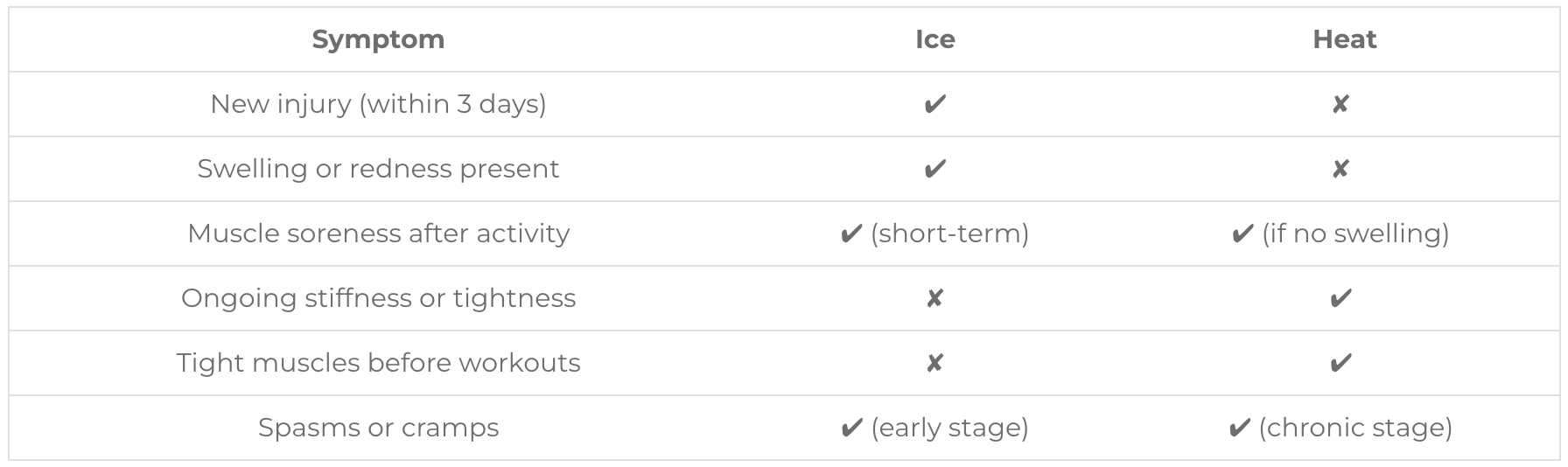
In some cases, it is okay to test both and use the one that gives you the most relief. Just make sure you are using the method correctly and at the right time.
More Important Than Heat or Ice: The Right Recovery Plan
Heat and ice are helpful, but they are not enough on their own. What really helps you heal is:
- Getting the right diagnosis
- Understanding what caused the injury
- Having a plan for recovery
- Rebuilding strength, movement, and control
- Knowing when and how to return to your activities
This is where physiotherapy can help. At Connect Physiotherapy & Exercise, we take the time to assess your injury, explain what is happening, and guide you through each phase of recovery.
We also talk about how and when to use ice or heat as part of your plan—not just to feel better today, but to heal properly for the future.
Still Not Sure What to Use? Let Us Help
If your pain is not going away, or you are not sure what caused it, don’t wait. Book an appointment with one of our experienced physiotherapists at Connect Physiotherapy & Exercise. We’ll help you make a plan that is safe, effective, and tailored to your goals. Whether you need ice, heat, or a full recovery program, we’re here to support your journey back to doing what you love.
With experience on both sides of the playing field, Jonathan has competed at the highest levels in soccer and Olympic weightlifting, and has worked with athletes of all ages and skill levels. His strong background in fitness and health assessment means he understands how the little things in treatment and training can lead to huge benefits in performance and recovery. Jonathan provides expert assessment, coaching and problem-solving to help you achieve meaningful change, improve resilience, and reach your full potential. He's committed to making sure you understand the "why" behind every rehab or training program, providing comprehensive education and instruction so you can achieve your goals of improving movement, elevating your game, or returning from injury better than before.