Hypermobility: What It Means and How to Address It

Have you ever been told you’re ‘double-jointed’ and wondered what that really means? This excessive range of motion at a joint, known as hypermobility, might be more than just a party trick—it can impact how your body moves and feels.
Understanding Hypermobility
Hypermobility refers to the ability of a joint to move beyond its normal physiological range, either actively or passively (Castori et al., 2017). It is more of a descriptive term rather than a standalone diagnosis and is often a symptom of a broader condition (Castori et al., 2017).
When hypermobility—whether localised to one joint or generalised across multiple joints—is accompanied by other symptoms, it may be classified as joint hypermobility syndrome or Ehlers–Danlos Syndrome—Hypermobile Type (Juul‐Kristensen et al., 2017).
Some of these symptoms can include:
- Joint instability, pain, and stiffness due to joint overload (Juul‐Kristensen et al., 2017; Kumar & Lenert, 2017)
- Muscle pain and typically muscular weakness (Juul‐Kristensen et al., 2017)
- Fatigue (Kumar & Lenert, 2017)
- Reduced proprioceptive acuity, meaning these individuals are less accurate in determining where their limbs are in space (Kumar & Lenert, 2017)
- Hyperalgesia, or heightened sensitivity to pain (Kumar & Lenert, 2017)
- Overall reduction in quality of life (Juul‐Kristensen et al., 2017)
Causes of Hypermobility
It is challenging to pinpoint a single cause for hypermobility and related conditions (Kumar & Lenert, 2017). However, research suggests that both genetic and environmental factors may contribute:
- Genetic Factors: Evidence indicates that hypermobility can be an inherited trait passed down from family members (Castori et al., 2014). However, in most cases, there does not appear to be a specific genetic mutation responsible for these conditions (Kumar & Lenert, 2017).
- Environmental Factors: Current theories suggest that environmental factors such as soft tissue damage, muscular imbalances, and joint overloading play a role (Kumar & Lenert, 2017; Tinkle, 2020). Overloading a joint can then alter how the body moves and place additional stress on other joints (Kumar & Lenert, 2017).
Managing Hypermobility
Effective management of hypermobility involves a combination of lifestyle adjustments and tailored exercise strategies (Kumar & Lenert, 2017). Regular exercise is crucial, but it must be performed appropriately (Kumar & Lenert, 2017). Generally, individuals should focus on controlling their movements with proper technique to avoid excessive ranges of motion and exacerbation of symptoms (Kumar & Lenert, 2017).
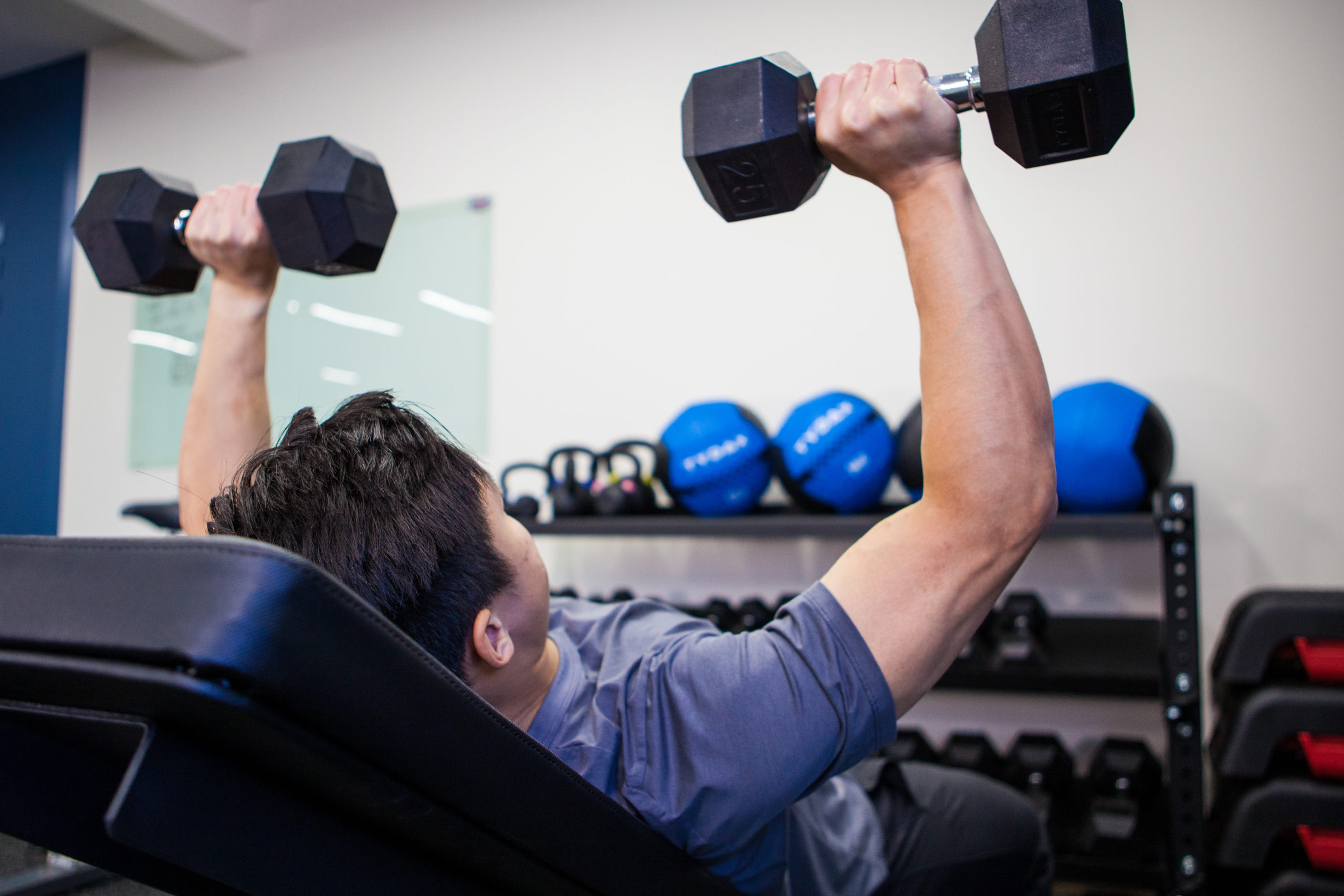
Resistance training, focusing on muscular strength, should be a regular part of the exercise routine to stabilize hypermobile joints (Kumar & Lenert, 2017). These programs have been shown to help manage symptoms, reduce pain, and improve functional capacity (Zabriskie, 2022).
Unfortunately, there is no standardised exercise program for this condition. Therefore, exercise programs should be individualised to address each person’s specific needs and limitations to ensure safety and effectiveness (Kumar & Lenert, 2017; Zabriskie, 2022).
Get Support from Connect Physiotherapy & Exercise
If you’re dealing with hypermobility or related symptoms, Connect Physiotherapy & Exercise can help. Working with an exercise specialist ensures that your training is effective and tailored to meet your goals safely. Start your journey today by booking a free consultation with one of our exercise specialists!
Works Cited
Castori, M., Dordoni, C., Valiante, M., Sperduti, I., Ritelli, M., Morlino, S., Chiarelli, N., Celletti, C., Venturini, M., Camerota, F., Calzavara‐Pinton, P., Grammatico, P., & Colombi, M. (2014). Nosology and inheritance pattern(s) of joint hypermobility syndrome and ehlers‐danlos syndrome, hypermobility type: A study of intrafamilial and interfamilial variability in 23 Italian pedigrees. American Journal of Medical Genetics Part A, 164(12), 3010–3020.
Castori, M., Tinkle, B., Levy, H., Grahame, R., Malfait, F., & Hakim, A. (2017). A framework for the classification of joint hypermobility and related conditions. American Journal of Medical Genetics Part C: Seminars in Medical Genetics, 175(1), 148–157.
Juul‐Kristensen, B., Schmedling, K., Rombaut, L., Lund, H., & Engelbert, R. H. (2017). Measurement properties of clinical assessment methods for classifying generalized joint hypermobility—a systematic review. American Journal of Medical Genetics Part C: Seminars in Medical Genetics, 175(1), 116–147.
Kumar, B., & Lenert, P. (2017). Joint hypermobility syndrome: Recognizing a commonly overlooked cause of chronic pain. The American Journal of Medicine, 130(6), 640–647.
Tinkle, B. T. (2020). Symptomatic joint hypermobility. Best Practice & Research Clinical Rheumatology, 34(3), 101508.
Zabriskie, H. A. (2022). Rationale and feasibility of resistance training in heds/HSD: A narrative review. Journal of Functional Morphology and Kinesiology, 7(3), 61.
His academic credentials, including a Bachelor's degree in Kinesiology from the University of Alberta and a CSCS certification from the NSCA, equip him with a in depth knowledge of physical performance and how to optimize it.Beyond his personal experience as a boxer, Josh's enthusiasm extends to sports like hockey and football, enriching his perspective on the varied demands of different athletic disciplines.Josh's approach emphasizes the importance of individualized attention. Whether it's enhancing athletic performance, refining movement techniques, or getting back into training and sport following an injury, he believes that appropriately planned and executed exercise is the key to achieving one's goals.As Josh looks to the future, his aspirations are anchored in the field of physiotherapy. With a strong dedication to ongoing education and supported by his academic achievements, Josh is a dependable guide for those aiming to improve their fitness and athletic abilities. For those determined to reach their peak potential, Josh Langkamp is the supportive partner you'd want by your side.